
Oceanfront vs Soundfront in the Outer Banks: Which Is the Better Investment?
The Spencer Team at Keller Williams Outer Banks
It's one of the most common questions we hear from buyers considering an OBX investment property: do you go oceanfront or soundfront? Both offer stunning water views, strong rental demand, and that signature Outer Banks lifestyle. But when it comes to the numbers, the risks, and what kind of investor you are, the answer isn't the same for everyone. Here's the full breakdown.
Oceanfront vs Soundfront: The Basics
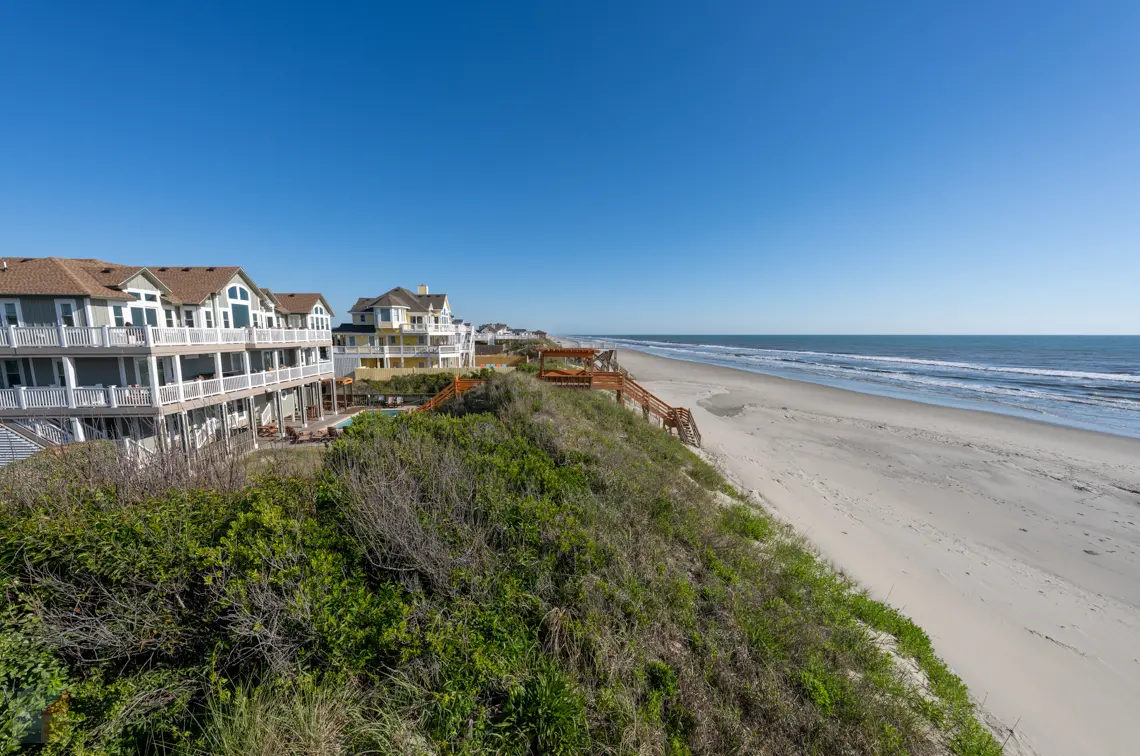
The Outer Banks is a chain of barrier islands shaped by two bodies of water. On the east side of NC Highway 12 sits the Atlantic Ocean. On the west side lie the Currituck, Albemarle, and Pamlico Sounds. Oceanfront properties sit directly on the beach with no roads or homes between you and the ocean. Soundfront properties sit along the calm western edge of the islands, overlooking miles of open water.
Both are waterfront. Both generate strong rental income. But they serve very different guest experiences and carry very different investment profiles.

Soundfront properties offer calm water, sunset views, and direct access to kayaking, paddleboarding, and fishing.
Side by Side: Key Investment Factors
| Factor | Oceanfront | Soundfront |
|---|---|---|
| Purchase Price | Higher entry cost | More accessible price point |
| Peak Rental Rates | Premium weekly rates | Moderate to strong rates |
| Booking Demand | First to book in summer | Steady demand, books quickly |
| Off-Season Appeal | Drops more in fall/spring | Holds better in shoulder seasons |
| Erosion Risk | Significant in vulnerable areas | Much lower physical risk |
| Insurance Complexity | Higher premiums, coverage gaps | Generally more straightforward |
| Maintenance Costs | Greater salt air and wind exposure | Typically lower wear and tear |
| Guest Experience | Classic beach vacation, sunrise views | Calm water, sunsets, watersports |
| Lot Stability | Varies; erosion is an active threat | More stable long-term |
Rental Income: Oceanfront Leads at Peak, Soundfront Holds Steady
Oceanfront properties are typically the first to get booked and command the highest peak-season rates. Families who want to walk straight to the beach will pay a premium for that convenience, and amenities like private pools, hot tubs, and elevated decks with ocean views push nightly rates even higher.
Soundfront properties are far from a consolation prize, though. They attract a loyal segment of guests — kayakers, paddleboarders, anglers, kiteboarders, and families with young children who prefer calm, shallow water. Crucially, soundfront rental rates hold more steadily in the fall and spring shoulder seasons, when oceanfront demand softens more significantly. From an annual income perspective, that consistency matters.
According to current 2026 market data, soundfront homes on the OBX are selling at a 98% list-to-sale price ratio and averaging just 57 days on market — signals of healthy, sustained demand from both renters and buyers alike.
Sources: OBX Realty Group / OBAR MLS, May 2026
The Risk Factor: What Buyers Need to Know in 2026
This is where the oceanfront vs soundfront conversation gets serious. Oceanfront properties on certain stretches of OBX coastline carry real, documented physical risk that no buyer should overlook.
As of June 2, 2026, 32 privately owned oceanfront homes have collapsed into the Atlantic Ocean in Rodanthe and Buxton, according to Dare County's official tracking. The most recent collapse occurred on June 2, 2026 on Ocean Drive in Buxton. Twenty-six of those 32 collapses have occurred in just the past two years.
Dare County officials have estimated that as many as 100 more homes could be at risk of collapsing in the next five years without intervention. Many of these homes were built decades ago with significant land buffers — buffers that have since eroded, in some locations at a rate of more than 10 feet per year according to Cape Hatteras National Seashore Superintendent David Hallac.
Insurance is also more complicated for oceanfront properties. Federal flood insurance through NFIP covers up to $250,000 for structures — a cap that commonly falls short for oceanfront homes valued at $500,000 to $1 million or more. NFIP policies do not cover damage caused by chronic long-term erosion, and neither standard homeowners nor flood policies will pay to move or demolish a still-standing home at imminent risk of collapse. The National Park Service has begun a pilot program to purchase and demolish the most threatened structures ahead of collapse, but private homeowners remain largely responsible for removal costs.
It's important to note that this erosion crisis is concentrated in specific vulnerable stretches, particularly along Hatteras Island's Buxton and Rodanthe villages. Well-positioned oceanfront homes on more stable sections of the OBX in Corolla, Duck, Kill Devil Hills, and other northern towns carry a very different risk profile.
Before making any waterfront offer, confirm the property's flood zone designation, elevation certificate, and current insurance premiums. Oceanfront properties in AE and VE flood zones carry significantly different cost structures. We pull this information as a standard part of our buyer process so there are no surprises at closing — and so you have an accurate picture of your true annual carrying costs.
Long-Term Appreciation: The Market in 2026
The broader OBX real estate market in 2026 has shifted meaningfully toward buyers after years of seller dominance. Active inventory is up, days on market are longer, and price reductions are more common — creating genuine negotiating power for buyers entering now. The average OBX sold price in May 2026 was $872,619, with a 90% sale-to-list ratio market-wide.
But the OBX isn't one market — it's a collection of micro-markets. Towns like Duck continue to show strong price resilience with quick sales and sustained demand. Southern Shores is one of the tightest markets on the strip. Meanwhile, Corolla has shifted into more buyer-friendly territory with over a decade's worth of active oceanfront inventory in some price bands.
Soundfront properties stand out in this environment. With a 98% sale-to-list ratio and just 57 days on market, soundfront homes are actually moving faster and closer to asking price than the OBX average — a signal that demand for this property type remains strong even as the broader market softens.
For oceanfront buyers, location within the OBX matters enormously. Stable oceanfront in northern markets like Corolla and Duck has a very different long-term outlook than erosion-affected Hatteras Island stretches where land itself is actively disappearing.
So Which Is the Better Investment?
The honest answer: it depends on what you're optimizing for, and where on the OBX you're looking.
Choose Oceanfront If...
You want maximum peak-season rental income, you're buying in a geologically stable area (northern OBX, not Hatteras Island erosion zones), you're comfortable with higher insurance complexity and carrying costs, and you plan to invest in amenities that drive premium rates. The classic OBX beach experience is what most renters are chasing, and nothing delivers it like a true oceanfront home in the right location.
Choose Soundfront If...
You want a lower entry price point with still-strong waterfront appeal, prefer more predictable year-round rental demand, want fewer headaches around erosion risk and insurance, or are drawn to the growing watersports and nature tourism market on the OBX. The 2026 soundfront market data — 98% list-to-sale ratio, 57 days on market — tells you this property type has a loyal, active buyer and renter base. Soundfront lots also tend to be larger, which can make for an exceptional personal retreat in addition to a solid rental investment.
In narrower sections of the Outer Banks — particularly in northern Duck, parts of Pine Island in Corolla, and narrow sections of Hatteras Island — some properties offer unobstructed views of both the ocean and the sound. You can watch the sun rise over the Atlantic and set over the Sound from the same home. These dual-exposure properties are among the most sought-after on the OBX for both investors and personal-use buyers.
Ready to Find Your OBX Investment Property?
Whether you're drawn to the oceanfront sunrise or the soundfront sunset, The Spencer Team knows this market inside and out. Let's find the right waterfront property for your goals.
Talk to The Spencer Team252-261-7881 | sales@obxspencer.com | thespencerteamobx.com